
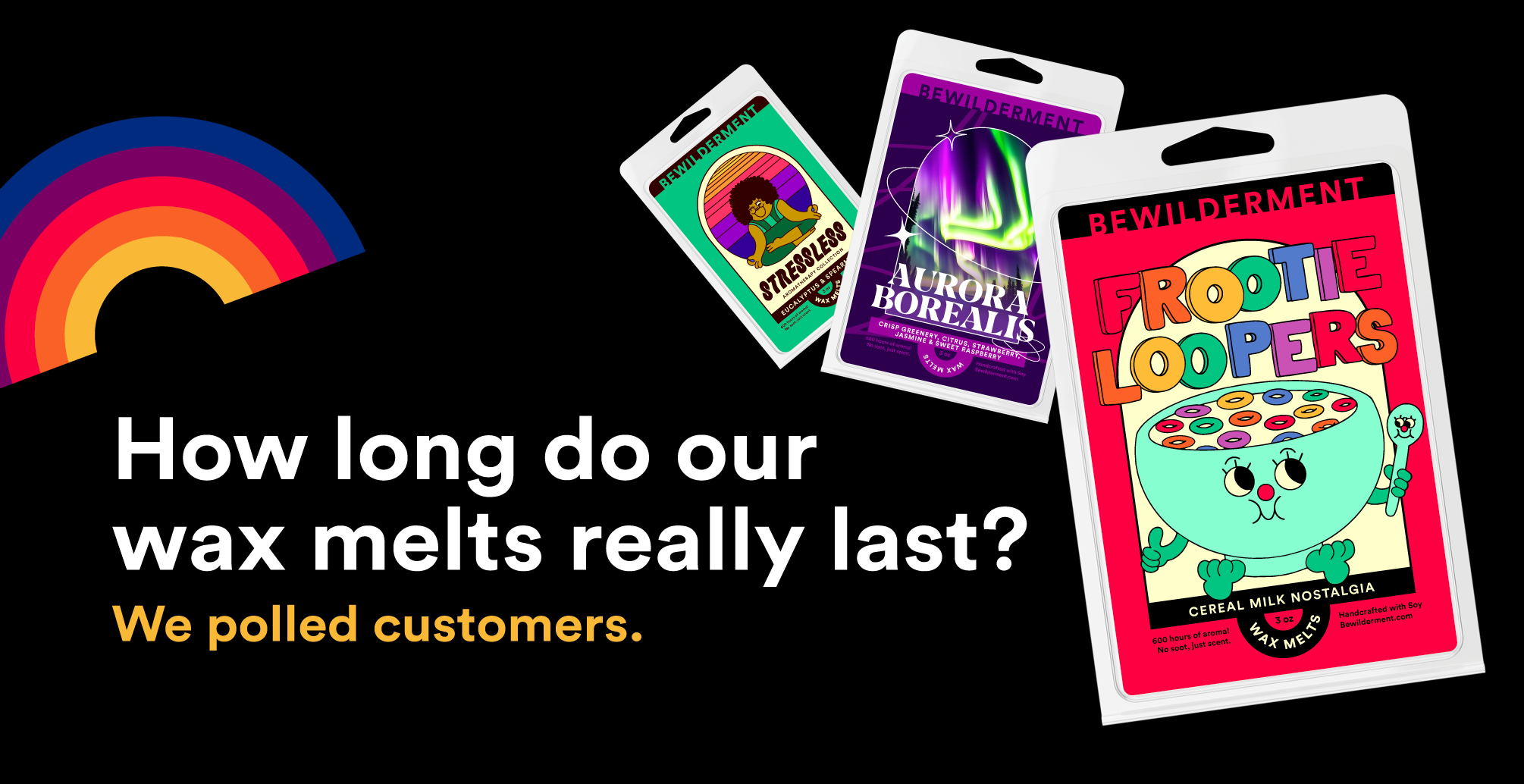
You can rewarm the same wax until its fragrance fades—but there isn’t one honest number of hours that fits every melt, warmer, and home. The scent, portion size, heat, and time your warmer is actually on all affect the experience.
We love a long-lasting fragrance. We also love an answer more useful than “approximately forever, hun.” Here’s how to tell when your wax still has something to give.
Count warming hours, not calendar days
“This cube lasted four days” sounds helpful until you realize one person warms for two hours each evening and another runs theirs much longer.
Four two-hour sessions equal eight warming hours. Four six-hour sessions equal 24. Same number of days. Very different amount of use.
For a useful comparison, keep track of the portion, warmer, and hours used. Follow your warmer’s operating limits; this is not an invitation to leave it on around the clock.
An older version of this article shared informal customer poll results and home observations. Those reports didn’t establish a standardized number of warming hours, so we no longer use them to promise 600–1,000 hours per bar or equivalence to ten candles.
Why does scent life vary?
- The fragrance: Different scent blends can have different strengths and staying power. A delicate fragrance doesn’t have to shout to do its job.
- The warmer: Heat output and dish design affect how the wax warms and releases fragrance. Hotter is not automatically better.
- The room: A small bedroom and an open living room with tall ceilings are different jobs. Airflow and placement also affect where you notice the scent.
- The portion: Cube sizes vary. Follow the product and warmer instructions rather than assuming every dish needs the same number.
Your nose can also become less aware of a familiar smell. Take a break before deciding to add more fragrance. The goal is a room you enjoy being in, not a scented jump scare for whoever visits.
How do I know when to replace the wax?
Replace it when it no longer gives you a noticeable fragrance after warming normally. The wax itself will usually still be sitting in the dish. That’s expected: a warmer releases fragrance without consuming the wax through a burning wick. Candle Warmers Etc. explains this process in its FAQ.
If you’re unsure, switch off, take a fragrance break, and assess it again during your next supervised session. You don’t need to keep reheating a scent you can barely notice out of loyalty. The cube will understand.
Let the warmer cool and remove spent wax using the manufacturer’s cleaning method. Put cooled waste wax in the trash, never down a drain.
Can I reuse wax melts?
Yes. Let the wax cool and harden in the dish, then rewarm it while it still smells good. Cooling doesn’t refill the fragrance, but you don’t need a fresh portion every time you switch on.
Adding fresh wax to old wax also leaves you with more wax in the dish. Remove spent wax first, and stay within the warmer’s capacity.
How to get the most from each portion
- Warm it when you’re there to enjoy it, then switch off when you’re finished.
- Keep unused melts sealed, away from direct sunlight and heat.
- Use the bulb type and wattage specified for your exact warmer. Never upgrade the wattage to chase a stronger scent.
- If performance seems off, check the instructions and setup before adding more wax or changing equipment.
Higher-wattage replacement bulbs can damage a warmer and may shorten the fragrance experience. This manufacturer’s bulb guide explains why matching the specification matters.
Do wax melts last longer than candles?
There’s no universal winner. Compare the actual amount of product, enjoyable fragrance hours, and cost—including the warmer—rather than treating every bar and candle as interchangeable.
Wax melts are especially handy if you like switching fragrances and reusing a warmer. Whether they’re better value depends on what you buy and how you use it.
New to the whole thing? Start with How Do Wax Melts Work? Or browse Bewilderment wax melts and find your next ridiculously good smell.